Showing posts with label 2011. Show all posts

Tuesday, February 8, 2011

Ford Focus Estate, 2011

Ford Focus Estate, 2011


The next-generation Ford Focus Estate is the fifth vehicle to be revealed from Ford Motor Company's new global C-segment platform that will underpin at least ten vehicles around the world and account for two million units of annual production by 2012.
Revealed so far are the new Ford C-MAX and Grand C-MAX models at Frankfurt 2009, the next-generation Ford Focus 4-door and 5-door cars at the 2010 North American International Auto Show, and now the Estate at Geneva.

At Geneva, Ford is also confirming that a global performance vehicle will be developed as part of the next-generation Ford Focus range, and that it will be powered by a version of the 4-cylinder Ford EcoBoost engine family.

Ford Focus Estate Targets Major Customer Base
The attractive next-generation Ford Focus Estate is a crucial model for the European market in particular, as around one third of all Focus customers choose this bodystyle. In some markets, such as Italy and Germany, the estate derivative represents more than half of all Ford Focus cars sold.

With its rakish appearance, the new Ford Focus Estate also makes a design statement and provides the ideal balance of dynamic looks and functional practicality. Full-length integrated roof rails enhance the estate's attractive kinetic design, while the tailgate has a self-closing function and neatly incorporates a compact roof spoiler.
Overall, the C-car segment in Europe remains relatively stable and accounts for around a third of total car sales with roughly five million C-cars sold annually. Although many premium manufacturers have also moved into the segment in recent years, it is among the volume makers that the competition is most fierce.

The market has seen significant fragmentation in the last decade thanks to the development of new bodystyle derivatives beyond the traditional four-door sedan, five-door hatchback and estate models.

By 2012, six bodystyles will cover 85 per cent of customer requirements in the segment in Europe - the four-door sedan, the five-door hatch, the estate, the five-passenger MAV, seven-passenger MAV and the small SUV.
While the Ford Focus Estate will initially launch only in Europe, it has been designed to share the wide range of technologies, fuel efficient powertrains, great driving quality and high levels of craftsmanship that all of Ford's new global C-cars will deliver.

The Ford Focus Estate debuts in the same vibrant Candy Red body colour which was first shown to great acclaim on the new Ford Focus five-door model unveiled at the North American International Motor Show in Detroit.

Ford Fiesta, 2011

Ford Fiesta, 2011


The Ford Fiesta is the next milestone under the ONE Ford plan to design and develop vehicles that meet the differing needs, wants and expectations of customers around the world. More than 500,000 Fiestas have already sold to customers in Europe and Asia.

Kinetics and aesthetics
Kinetic design imparts a sense of movement - even while standing still - harmonizing character elements to reflect global Ford identity, enabling Ford Fiesta to project its own air of confidence, style and individuality. Fiesta targets a youthful "design progressive" mind-set, a consumer group that values style and diversity as worthy assets.

Up front, Ford Fiesta sports the global Ford face, centering the Blue Oval badge on the grille over the signature inverted trapezoid lower grille opening. These subtle cues engender familiarity across the portfolio, providing aesthetic linkage between the distinctive new Ford Taurus, the fuel-efficient midsize Fusion and the bold Fiesta.

Adding eyes to the Ford Fiesta face are sweeping, elongated headlamps that frame and connect the hood to muscular, sculpted front fenders. Available in sporty five-door hatchback or four-door sedan body styles, Ford Fiesta provides ample space for occupants and their gear.
The Ford Fiesta design is further enhanced with a choice of nine vivid new colors. From Bright Magenta through Lime Squeeze to Blue Flame, Fiesta's broad color palette - more available colors than any other segment competitors - instills vibrant individuality.

Inside Ford Fiesta
Ford Fiesta is as dramatic on the inside as it is on the outside. Boldly sculpted surfaces, contrasting colors and comfortable, supportive materials make the interior as individual as the driver.

The instrument panel centerstack - focal point of the new Fiesta interior - was designed to feel as useful and familiar as the keypad on a mobile phone.

Soft, sculptured surfaces and the centerstack layout provide the Ford Fiesta with a sense of harmony. Intuitive switchgear placement, comfort zone seating and available ambient lighting allow a driver to maximize the mood with seven complementary colors - switchable among three levels of intensity - for interior accent lighting.

Fun, with fuel efficiency
Ford Fiesta's flowing sculpted hood covers a 1.6-liter DOHC I-4 engine with an estimated 119 horsepower and 109 ft.-lbs. of torque. Spirited performance and fuel-efficient economy are signature attributes with the Ford Fiesta expected to deliver best-in-class fuel economy at 40 mpg.

Ford Fiesta's advanced 1.6-liter engine features Twin Independent Variable Camshaft Timing (Ti-VCT) allowing the engine to be downsized for fuel economy while continuously optimizing camshaft phasing for throttle response, performance and flexibility.
Big results from a small package are possible with several new technologies in this new global engine, including an advanced new front end accessory drive (FEAD) belt with stretchy dynamics to improve the engine's thermal dynamics. The elasticity in this new drive belt eliminates the need for a belt tensioner and contributes to overall fuel economy.

Ford Fiesta features a standard five-speed manual transaxle with gear ratios selected to offer spirited off-the-line performance and exceptional fuel economy for drivers who desire three pedals and a stick shift to maximize driving experience.
Specially tuned front struts, bushings, dampers, stabilizer bars and a rear twist-beam axle keep Ford Fiesta sure-footed and firmly planted. Sporty, European driving dynamics prevail.

Automatically game-changing
An available all-new North American industry-exclusive PowerShift six-speed automatic transmission combines the responsive performance and fuel economy of a manual transmission with the convenience of a traditional automatic in one advanced, dual dry-clutch package.

Twin internal clutches keep the PowerShift in constant mesh, always optimizing for maximum responsiveness or fuel efficiency, depending on input received from the driver's foot on the accelerator pedal.
This "dry" transmission operates with sealed internal lubrication, reducing internal friction and adding to Ford Fiesta fuel economy. The lack of pumps and hoses reduces under-hood complexity, saves weight and also contributes to fuel efficiency.
PowerShift has been proven in Ford's European market and will redefine North American small car segment expectations for responsive shifting and fuel efficiency.

Power steering conserves fuel
For confidence-inspiring on-road dynamics, Ford Fiesta features Electric Power Assist Steering (EPAS) which reduces complexity while saving weight and fuel. This advanced system is speed-sensitive - providing optimized assist based on speed, cornering forces and acceleration or deceleration.
The Ford is aggressively moving to EPAS across its product lineup. The system already is available in several Ford, Lincoln and Mercury nameplates, and by 2013 nearly 90 percent of Ford's lineup will offer this fuel saving technology.

EPAS also includes Pull-Drift Compensation to help Ford Fiesta track true regardless of road crown or side wind conditions. In addition, active nibble control helps detect and compensate for tire balance irregularity. Both features - enabled by EPAS - are class-exclusives.

Infiniti M, 2011

Infiniti M, 2011


With the Infiniti M a new style of performance saloon - brimming with passion, craftsmanship and driver appeal - comes to Europe in 2010 as the world's newest luxury automotive brand Infiniti faces up to the traditional executive car hierarchy for the first time. Power, performance and technology all come together with signature Infiniti sophistication in the all-new Infiniti M Line which makes its official public debut in the USA, prior to European sales starting September 2010.

Featuring industry-first features, advanced Safety Shield technology and displaying Infiniti's unswerving commitment to passionate design and a rewarding drive, Infiniti's latest example of Inspired Performance will be the first Infiniti M to be available in all of Infiniti's 34 world markets - including Western Europe.

A more exclusive alternative to the traditional stalwarts of the executive class, such as the BMW 5-series and Mercedes E-Class, the Infiniti M Line goes on sale in European showrooms from September 2010 with petrol and diesel V6 power options, while an innovative petrol-electric hybrid is due to join the range in Europe in 2011.

The Infiniti M Line takes Infiniti's saloon range in Europe - which also includes the Infiniti G37 - to a higher new level, inside, outside and on the road, too. The Infiniti M combines rear-wheel-drive poise with impeccable luxury credentials in a 4945mm-long saloon with space to spare inside the best designed and finished cabin that Infiniti has ever offered. As flagship saloon for the brand, the Infiniti M Line also revels in the uniqueness that is Infiniti, from the flowing lines of the Essence concept car-inspired profile and the integrity of the natural materials used, to the pledge of an utterly hassle-free ownership experience.

Infiniti's most technologically advanced and beautiful saloon yet, the third-generation Infiniti M will bring with it to Europe its unimpeachable reputation for quality among American luxury car-buyers. Every Infiniti M model will also arrive designed and equipped to succeed in some of the world's toughest executive car markets, blending qualities that have made it a popular car in the US with the high-performance abilities needed to compete on European roads.

The new Infiniti M Line has been able to call on key Infiniti strengths in order to satisfy more demanding drivers. These include lightweight componentry, adaptive technology, race-bred engine design, sophisticated chassis design with almost perfect weight distribution and proven double-wishbone suspension with the availability in some models of Infiniti's acclaimed sports handling technology, 4-Wheel Active Steering (4WAS). To the benefit of looks, ride and cabin room, the M also benefits from one of the longest wheelbases in the class.

The new Infiniti M has its first outing - in the metal - at an unveiling in Beverly Hills, California, prior to US sales commencing in the spring of 2010. An earlier debut, in August this year, was as a "virtual" car created in 3D by video mapping - presaging a trend for "firsts" that the new Infiniti M Line is well placed to expand upon.

The body
The M's design is signature Infiniti, its subtle curves and complex surfacing endowing it with an emotional draw that goes beyond the colder, more austere class norm. Its deeply sculpted door surfaces and front bumper section add distinction and a sense of both aggression and intrigue. The body crease below the glasshouse is the clearest of many design cues picked up from Essence, the stunning Infiniti concept car that made its debut at the Geneva Auto Show early in 2009.

A look inside
The new Infiniti M has an interior every bit as carefully crafted as its exterior. The result of extensive research by engineers and designers into every aspect of the cabin, from the shape of the switches to the softness of the textures, the aim was to create Infiniti's best saloon car interior ever, with human warmth and an outstanding level of luxury appointments. And all with that most important of Infiniti traits: a clear focus on the driver.

Mission accomplished then. The Infiniti M cabin's wow factor begins as soon as a door is opened: there can be no missing the perception of quality in everything that is seen, touched and felt - right down to the smallest details. Combining vibrant, Japanese-influenced design and luxury materials, it is an immediately alluring, sensual place, as well as notably spacious. The M's wheelbase, at 2900mm, is longer than that of most competitors and this shows inside where there is plenty of room for five adults.

Blind Sport Intervention (BSI)
The latest in a list of world-first safety features from Infiniti, BSI takes blind-spot technology to another level by introducing an element of side collision protection. As well as giving the driver both visual and audible warnings of another vehicle in the blind-spot area which is detected by using radar, BSI intervenes if the driver ignores the warnings and attempts to steer into the other vehicle's path. The intervention is in the form of a directional adjustment, executed automatically. This is achieved by selective braking on one side of the car to create a "yaw" effect that eases the vehicle back into its original lane.

Active Noise Control (ANC)
By identifying undesirable sounds in the cabin and then playing back through the speakers sound waves of opposite phase, the original noises are cancelled out, making the M's interior a quieter, more restful place to be. The system is aimed at reducing undesirable low-frequency engine sounds only. Infiniti M models with the 16-speaker Bose® Studio Surround® sound system are equipped with Bose Engine Harmonic Cancellation (EHC) which is even more effective at controlling unwanted noises.

Infiniti Drive
The M's throttle sensitivity and transmission mapping are fine tuned according to which of four driver-selectable modes is engaged via a switch positioned behind the gear lever: Standard, Eco, Sport and Snow. The Eco mode utilizes green and yellow lights on the instrument panel to provide feedback on fuel efficiency. Eco mode also introduces a new Infiniti concept known as the Eco Pedal. If driving too aggressively, the driver will feel the accelerator pedal "push back" to indicate fuel is being wasted. Sport mode changes the automatic shift points and enhances throttle response for increased performance. It will also adjust the 4WAS for a nimbler feel and raise the ESP intervention level.

Forest Air
Infiniti believes the quality of the air within a car's cabin has a direct bearing on the well-being of driver and passengers. Which is why it developed Forest Air, Infiniti's most advanced climate control system that makes its debut in the Infiniti M Line (depending on model). The system offers unrivalled temperature, humidity and pollution control while re-creating the gentle breezes and subtle scents of an environment known to promote alertness and relieve stress: the forest.

ESP with Dynamic Cornering Enhancement
The Infiniti M Line benefits from Infiniti's latest electronic stability program which optimizes control of braking and engine torque on individual wheels to achieve smoother and more stable cornering. The system can apply selective braking to help create increased steering response when rapid changes of direction are required, such as in S bends or fast lane-change manoeuvres.

Safety Shield
For the 2011-model year M Line, Infiniti's 360-degree "bubble of protection" around the car known as the Safety Shield becomes more complete than ever. New features such as Blind Spot Intervention and Dynamic Cornering Enhancement are fully integrated into existing Safety Shield technology such as Intelligent Cruise Control (full speed range), Lane Departure Warning (LDW) and Lane Departure Prevention (LDP), Distance Control Assist (DCA), Intelligent Brake Assist (IBA) with Forward Collision Warning (FCW) and Front Pre-Crash Seat Belts.

Monday, February 7, 2011

Bentley Continental Supersports Convertible, 2011

Bentley Continental Supersports Convertible, 2011


The Bentley Continental Supersports Convertible further strengthens Bentley's supercar range, following the introduction of the Bentley Continental Supersports Coupé in 2009. The new Supersports Convertible, with the same 630PS (621bhp/463kW) twin-turbocharged W12 engine, is the fastest, most potent drop-top Bentley has ever built, offering the ultimate Bentley driving experience in the world's most dramatic convertible.

A highly focussed, pure Bentley driving experience
With 630PS (621bhp) and 800Nm (590lb ft) of torque from its pioneering FlexFuel engine and new 'Quickshift' transmission, the Bentley Continental Supersports Convertible is the fastest drop-top Bentley has ever built. It accelerates from 0-60mph in 3.9 seconds (0-100km/h in 4.2 seconds) and, conditions permitting, can continue onto a top speed of 202mph (325km/h).

The increased power and torque are transmitted to the all-wheel drive system via an uprated and rapid six-speed Quickshift transmission, which more than halves shift times (to just 93 milliseconds) and maximises the new Convertible's enormous potential. The revised gearbox also has the ability to deliver double downshifts (sixth to fourth gear, for example) and improves acceleration across the entire gear range. To cope with the additional power and torque, the planetary gear set of the ZF transmission is also strengthened.

Positive torque during downshifts is achieved through engine and gearbox electronic controller interaction for extra throttle and fuel injection during the overrun. During transmission upshifts, fuel and ignition are cut momentarily to give faster mechanical shift times through torque reduction, also improving shift quality and durability.

Designing the 'extreme' Bentley convertible- where form follows function
The evolution of the Bentley Continental Supersports Convertible's design is very much a case of form following function, with new purposeful sculptural forms signalling the engineering changes beneath the skin. Key engineering-led design changes to the Supersports include:
    * Revised front air intakes and new bonnet vents to improve airflow and cooling
    * Flared rear wings to accommodate wider rear track
    * Discreet bootlid spoiler benefitting aerodynamic balance at high speeds

The increased power and torque of the W12 engine necessitated an additional 10 per cent airflow to the twin turbocharger intercoolers and cooling system. With extensive use of Computational Fluid Dynamics techniques, Bentley's designers responded with a purposeful and dramatic style, featuring large vertical intake apertures. Twin bonnet vents were added to ensure positive air extraction.

From the front, the radiator, lower grille and dual bonnet vents are finished in a striking Smoked Steel finish. Derived from an innovative technology normally used to apply a coating to luxury watches and specialised industrial tools, Physical Vapour Deposition (PVD) is a complex and time-consuming process that involves vaporised metal being deposited onto the surface of, in this case, stainless steel.

Giving a darker, more solid appearance, it is the first use of a PVD finish on stainless steel in the car industry. In addition to the Smoked Steel finishes, a gloss black finish to the headlamp casings and rear lamp clusters gives the Bentley Continental Supersports convertible's distinctive face and muscular rear additional visual impact.

Restyled - and more aerodynamic - door mirrors match the exterior paint choice and the window and door surrounds replace polished stainless steel with a Smoked Steel finish to match the front grille. Eye-catching, black gloss Bentley-branded brake calipers act on the carbon ceramic brakes. Surrounding the brakes are the unique 20-inch, forged alloy wheels with Smoked Steel-finish which are exclusive to Supersports models. Large diameter tailpipe trims round out the car's purposeful stance when viewed from the rear. Beneath the bonnet Supersports badges grace the cover of the 630PS (621bhp) W12 engine.

The Bentley Continental Supersports Convertible has an electrically operated, three-layer fabric hood with advanced acoustic insulation to provide superb levels of refinement and comfort when raised. A choice of eight hood colours are available, including a new Dark Grey Metallic option, which is achieved by weaving a 'grey' acrylic fibre with a semi-transparent 'metallic effect' fibre in a twill weave construction to create a directional colour effect.

Sunday, February 6, 2011

Koenigsegg Agera, 2011

Koenigsegg Agera, 2011


Koenigsegg celebrate 15 years of making dream cars, by unleashing their latest jewel - the Koenigsegg Agera. A new supercar aimed to take the Koenigsegg experience to the next level, both on the road and the track.

Agera, the Swedish verb "to act", has been chosen as the name for Koenigsegg´s latest super creation, as it symbolizes the Koenigsegg philosophy well. Koenigsegg is always striving forward, seeking challenges beyond limitations. The new supercar Koenigsegg Agera is an outcome of that creative process and its functions respond very well to the given name.

A testament to time
The Koenigsegg Agera is a testament to time. The original shape and concept of the Koenigsegg CC, created 15 years ago, is still valid, fresh and highly competitive today. The Koenigsegg Agera still stay true to the original philosophy, shape and size of the original CC. At the same time, it looks, feels and performs like something belonging to the future, with all new content.

A Supercar is not better than the tires it use, as it is the only link between the road and the car. Therefore Koenigsegg has a deep and long term collaboration with Michelin, when it comes to tire development. The Koenigsegg Agera program will take this collaboration to the next level and is expected to set new standards when it comes to overall performance -wet as well as dry handling.

The Koenigsegg Agera is as wide at the front as in the rear of the car. This gives very good balance in corners and minimizes body roll.

The Koenigsegg Agera also features the latest in braking technology, incorporating an adjustable ABS system, 392x36 and 380x34 ventilated and drilled ceramic discs, for unparalleled braking performance and zero fade regardless of track or road condition.Thanks to optimized breathing and Twin Turbo, power is now 910 hp, running on regular petrol. Torque is maximum 1100 nm and is reached at 5100 rpm. There is over 1000 nm of torque available from 2680 to 6100 rpm.

The new traction control is the fastest reacting in the industry, with auto adapt functionality for different road conditions and driving styles as well as several manual settings.

Koenigsegg has also developed a new type of interior illumination, which is a worlds frst in the car industry - Ghost light. The illumination shines through the billet aluminium buttons and surfaces by way of invisible nanotubes, creating excellent visibility of the symbols, as well as a very clean and stylish appearance, framed by an all-new carbon fbre centre console and tunnel assembly.

Furthermore, the driver can easily select the information he wants displayed in front of him, on the all new multi-info cluster combined with the upgraded infotainment display, ranging from basic functionality, to G force meter, power meters, Sat-nav, music, lap-timer or compasses - to best suit the current driving conditions, be it highway cruising, touring country roads, city navigation or serious track driving. Furthermore the interior features the new Koenigsegg Agera stitching and seams, which gives an beutiful fuidity to the interior.

All in all the Koenigsegg Agera is created to maintain Koenigsegg's position as one of the most engaging and top performing cars on the road, on the track -on the planet. Still, maintaining the largest luggage space in the industry and the novel Koenigsegg doors and detachable/stow able hardtop, that really makes all Koenigsegg cars stand out.

The Koenigsegg Agera will be produced in parallel to the Award winning CCX and CCXR models. This gives Koenigsegg the ability to live up to our customers varying wishes and demands. The Agera is on display at the 80th Salon International de l'Auto in Geneva. The pre-production show car will be put through its phases for the coming six month prior to the production car launch of the Agera. Finally, Agera is also short for the Greek word Ageratos, which in ancient Greek means "ageless".

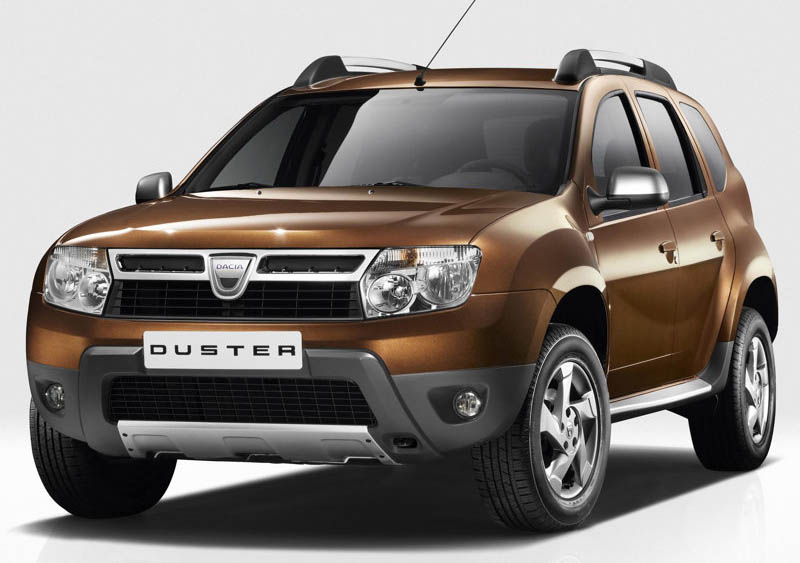
Dacia Duster, 2011

Dacia Duster, 2011


The Dacia Duster project was born out of the simple premise that a real need existed in the world for an affordable, comfortable and rugged 4x4, a class which is currently not well served. Aware of this gap, the Renault group decided to develop an all-terrain vehicle aimed initially at emerging markets. The needs of European customers were also taken into account from the project outset.

In Europe, Dacia's success has highlighted the demand for modern, reliable and affordable cars. Although the current range of 4x4s and SUVs is quite extensive, it neglects the call for a functional, affordable all-terrain vehicle, favouring instead SUVs that are expensive and often ill-suited to the needs of off-road driving.

Indisputable 4x4 looks
At first glance, Dacia Duster is clearly a 4x4. Its front end exudes a sense of ruggedness, with its imposing chrome grille and sump guard also pointing to its clear 4x4 credentials. Seen in profile, its high ground clearance, wide wheel arches and body protection are an open invitation to take on even the toughest surfaces.

Dacia Duster was designed to tackle all types of roads and tracks, all over the world. In order to meet these varied needs, it will be available in all markets in both 4x2 form (for customers looking for good ground clearance and a high driving position, without the need for four-wheel drive) and with 4x4 transmission for off-road driving.

Dacia Duster's strengthened undercarriage is suitable for dirt roads and all-terrain use thanks to its high ground clearance (more than 200mm) and impressive clearance angles (approach angle: 30 degrees; departure angle: more than 35 degrees).

Dacia Duster is easy to drive and not only aimed at all-terrain drivers. Its combination of its low unladen weight (1,180kg in 4x2 - 1,280kg in 4x41) and compact proportions, ensure particularly agile handling. In the 4x4 version, thanks to the unique and intuitive control (sourced from Nissan) located at the foot of the centre console, Dacia Duster drivers can easily adapt the vehicle's transmission configuration to meet their needs of the moment. This control allows one of three modes to be selected:

When the AUTO mode is selected, the front/rear torque split is calculated automatically as a function of available grip. This system is aimed at providing optimal traction, however much grip is available, and gives Dacia Duster genuine 4x4 ability. In normal conditions, the torque is transmitted through the front wheels only. If traction is lost, or when grip is at a premium, some of the torque is transferred to the rear axle. In extreme conditions, the torque is split equally front and rear. This split is performed by an electromagnetic torque converter supplied by Nissan.

In LOCK mode, the driver electronically locks it into 4x4 mode, whereby 50 per cent of torque is consistently fed through the rear axle. This mode is recommended in low grip conditions (snow, mud, dirt, sand) at low speeds.

In 4x2 mode, the transmission is locked into two-wheel drive. This mode is suited to driving on good roads and reduces fuel consumption.

A DACIA 4x4 WHICH DELIVERS ALL THE STRENGTHS EXPECTED OF THE BRAND
Dacia Duster, the sixth vehicle in the Dacia range, remains true to the brand's philosophy by offering unbeatable cabin space for its price, plus low running costs thanks to its thrifty fuel consumption, as well as a high level of safety and reliability whatever the conditions.

Unbeatable cabin space for its price
Although Dacia Duster's price is comparable with that of a city car, its exterior and interior dimensions are more akin to those of a compact car from the segment above. It comfortably seats up to five adults, with both front and rear occupants enjoying the same amount of space as passengers in its sister Logan model.

Dacia Duster's boot capacity is unbeatable, too, with a volume of up to 475dm3 ISO. With the rear benchseat folded and tipped forward, its impressive carrying ability can even exceed 1,600dm3 ISO.

Reliable engines with good fuel economy and low CO2 emissions
Both the 4x2 and 4x4 versions of Dacia Duster will be available with either a 1.6 16V 110hp petrol engine, or 85hp or 105hp dCi diesel power. All three powerplants have already demonstrated their efficiency under the bonnet of a number of Renault group models.

These engines are perfectly suited to the criteria of cost, strength and ease of maintenance that are a hallmark of the Dacia range. Combined with Duster's low weight, they ensure that Dacia's newcomer returns low fuel consumption and boasts impressive ecological credentials, with the dCi diesel versions emitting less than 140g of CO2/km in 4x2 form (qualifying Duster for the Dacia eco² signature) and less than 150g of CO2/km in the case of the 4x4 versions.

Safety: an absolute priority
Reliability and strength: Dacia fundamentals
Like all the vehicles based on the B0/Logan platform, Dacia Duster has been engineered to deliver the hallmark strength and reliability motorists have come to expect of the brand.

Particular attention has been paid to anti-corrosion protection thanks to several precautions:
    * wax-injected underbody and opening panel hollow sections,
    * mastic sealing of exterior joints,
    * additional wax treatment of underbody mechanical components,
    * stone-chip protection for underbody, sills and wheel arches.

Saturday, February 5, 2011

Maserati GranCabrio, 2011

Maserati GranCabrio, 2011


The Maserati GranCabrio - four proper seats, comfortable, inviting and all-enveloping. Never before had an open-top Maserati offered so much. Never before had a car with the Trident badge allowed an entire family or four friends to enjoy a journey in the open air. The Maserati GranCabrio's magical chemistry starts when you look at it: it is shockingly beautiful, with the soft top up or down. Indeed it features a sophisticated canvas top, for very precise reasons, which can be summed up in three words: «centre of gravity». Fabric, ultra-high tech fabric, weighs very little, infinitely less than metal and helps the car's road-holding: the overall system weight is just 65 kg. And then fabric is pliant, it complements the palette of the car's exterior colours six times over, the number of shades in which it is available, from a solid black to a high-tech titanium grey, to a warm chocolate colour.

28 seconds, that's the time it takes for the Maserati GranCabrio to go back to being a secure cocoon. A flying one too, thanks to a Cx of 0.35 with the roof up, which increases by a mere trifle, to 0.39, with the top down.

Design is at the service of comfort. The times when anyone travelling in the back of a sports car were resigned to suffering physical discomfort are well and truly over: rear passengers in the Maserati GranCabrio are not supporting actors, but co-stars of the journey. The legs, even for those who are more than six feet tall, are no longer crammed in, the spine is no longer forced into an unnatural erect position, but comfortably and physiologically supported on backrests designed so that sportiness does not need to compromise on comfort.
Maserati GranCabrio

The Maserati GranCabrio's Design
Dynamism, sensuality and passion have always been the features that transform Pininfarina's creative genius into masterpieces to be admired on roads the world over. The latest work of art to leave the Maserati factory, the Maserati GranCabrio, has the design of a dream car, but it is a real masterpiece that's just asking to be driven by lovers of beautiful cars who want to travel cocooned in a refined and comfortable ambience.

The challenge for Pininfarina was an intriguing one: never before had a proper four-seater convertible, capable of accommodating four adults comfortably without stealing even the tiniest bit of the incomparable pleasure of travel, been produced by Maserati. Now that the craftsmen have completed their work, it all seems obvious: the Maserati GranCabrio could only ever have been like this. An expert eye, however, understands how much power lies behind the front, imposing and dynamic at the same time, the sinuous and feline flanks and a rear that speaks a high-tech language with a wide aerodynamic diffuser tested in a wind tunnel, crowned by large, twin oval-section chrome tailpipes.

A sculpture that speaks to connoisseurs the ancient language of the great Italian coachbuilders, a beautiful car to admire when it is open, but also when it is moving with its roof up, something that isn't always the case for cars of this type. The canvas soft top was chosen over a rigid folding roof as, with its complicated closing system, would have imposed on engineers and designers unacceptable constraints for anyone seeking beauty in its purest form. And so the "all-clear" was given to supremequality materials and state of the art engineering, to a structure with a backbone consisting of five steel and aluminium spokes and covered with a triple-layer canvas available in six colours, meeting every single customer's requirement. The whole system weighs only 65 kg but, at the same time, guarantees maximum aero-acoustic efficiency and allows the Maserati GranCabrio to be enjoyed in all seasons, thanks to the most stringent tests conducted at 30 degrees below zero and at 40 degrees in the shade.

When the soft top is up the drag coefficient is 0.35, while with the soft top down 0.39. Extraordinary figures, the mark of a perfect chemistry between aesthetics and functionality. Without forgetting another absolute imperative, the comfort of those travelling in this open-top granturismo. The optional wind stop was designed precisely to fulfil this purpose, to provide passengers with excellent protection, even at high speed. So, with the wind stop on, the volume of air from outside falls by 70%, whilst the air speed inside the cabin is down 50%.

The Maserati GranCabrio's Voice
The voice of the Maserati GranCabrio, the musical notes of its V8 are powerful but subdued when travelling at a modest pace, but they can reach the strength of a tenor's high tones when the driver demands the maximum. The secret of such flexibility lies with the pneumatic control valves that manage the exhaust: normally they remain closed, to ensure that the car travels within the bounds of discretion, but if the Sport mode is selected, they open above 3000 rpm and the sound becomes a powerful roar, especially with the roof down.

The eight-cylinder orchestra is a chorus that sings about the pleasure of driving, harmoniously conducted by the 6-speed automatic gearbox. This transmission is the result of a close working relationship between Maserati and ZF, which has successfully interpreted the exciting combination between the 323 kW (440 HP) of the V8 engine and the fluidity of the automatic gearbox. And if the driver wants to feel even more like an orchestra conductor, all he has to do is select the Manual mode, and modulate the sound of the engine to the rhythm of the manual shifts, better still when using the steering wheel paddles.

The Maserati GranCabrio demands to be heard, also through the voice of its hi-fi system, developed by Maserati and Bose. Keeping even the most demanding audiophiles satisfied was not an easy task: without the roof to act as a resonating chamber the layout of the speakers had to be completely redesigned. In the end 12 were fitted: one speaker in the middle of the dashboard, two tweeters and two woofers set into each door, one front bass box under the front passenger seat, two tweeters and two woofers on both rear panels and a rear-mounted bass box containing two woofers. It is the woofers, speakers which reproduce the lowest tones and give the right depth to an orchestral crescendo or the rhythmic base of a jazz trio, the keystones behind the perfection of the "GranCabrio concert hall". The rear bass box, for example, has an unusual shape, extending behind the backrest and under the rear armrest so that it can perform at its best.

The Maserati GranCabrio's Dynamics A must-have feature for a car that is as much fun to drive as the GranCabrio is a great sense of balance, achieved with a well thought out weight distribution. The latest Trident creation is unrivalled on this level as well: with the soft top up 49% of the weight is over the front axle and 51% over the rear, whilst the rates with the soft top down become 48 and 52% respectively.

The Skyhook suspension system features continuously adjustable gas dampers which adapt to the ever changing road conditions. In practical terms, this means that every irregularity is "concealed" to the driver, who can then enjoy an incredibly smooth driving experience in true comfort.

On board the Maserati GranCabrio
Sleek and sporty from the outside, comfortable and cosy from the inside. This formula was refined with the expertise of the designers who were put to the test with the Maserati GranCabrio concept. A concept which envisaged, first of all, two adults being able to use the rear seats even on long journeys, without suffering from cramps or fatigue.

Integrated systems
Twenty five degrees centigrade and dehumidified air: this is what the experts reckon is the ideal situation for the wellbeing of people at home, in the office or when travelling by car. A rule that is certainly not set in stone, given that each of us has our own ideal temperature and, during car journeys, uses the on-board climate control system to find it.

On the Maserati GranCabrio the driver is just required to set the desired temperature in a range falling between 16 and 32 degrees and the electronics will start to mix the air and meter with micrometric precision the intensity of the flows until the target is quickly reached. The climate control system has been finetuned to offer maximum comfort both with the soft top up and down, adjusting itself accordingly. It knows that it has to perform quite differently on an early summer's evening or on a blisteringly hot day and it is also very well aware that it mustn't be too invasive in acoustic terms so that the engine can be left to sing to its heart's content.

The Maserati GranCabrio's Interior
The Maserati GranCabrio embodies the essence of Italian craftsmanship, which has its roots in historic workshops from the Renaissance era and has gradually evolved, without losing sight of its own noble origins. The seats are the first thing one appreciates when getting behind the wheel: upholstered in Poltrona Frau leather, they feel plush, naturally soft and cosy in Winter, fresh and airy in Summer. Leather bound to improve with the passing of time, just like a great vintage wine.

The palette of colours includes no less than 10 shades, which can be blended together for seats, dashboard, tonneau cover, steering wheel and gear knob in an infinite number of combinations to create a tailor-made ambience to suit one's own taste. Each button on the steering wheel and dashboard is embellished with a fine chrome surround, an elegant stamp of an unquestionable superiority of style. The Trident logo is embossed by hand on the headrests and the exposed stitching on the armrest is hand-sewn.

More hands have crafted the precious woods that take pride of place in the Maserati GranCabrio's cabin. These hands have smoothed these woods with infinite patience, removed even the slightest impurities and polished them again to obtain an eye-catching end-result. The Carbalho wood comes from Brazil. Maserati sought it out in its distant lands of origin because it has inimitable credentials: each part of it has a different weave, a sort of fingerprint that guarantees that each car is unique.

Maserati open-top Heritage
The Maserati GranCabrio is the first open-top four-seater Maserati but this doesn't mean that it is without noble ancestors. On the contrary, entire chapters of the history of the motor car have been written by open top Trident cars, although they were strictly two seaters.

The first is the legendary A6G Frua Spyder, produced in a very limited series in the 1950s: it is in the details that the individual cars are distinguished from one another, details, which in the unique Frua, soar to the level of a masterpiece. To have a better understanding, one has to look no further than the front end with the chrome surround and the sunken fog lights, which a few months later, in the A6G 2000, would be transformed into the oval-shaped radiator grille, typical of the Maserati, with the large trident in the middle.

The same blood flowed through the mechanical veins of the A6G Frua Spyder that would then ennoble cars such as the 3500 Gt Spyder by Vignale, a matchless source of inspiration for the great Italian coachbuilders of the 1960s, who made a competition out of dressing them with elegant suits hand-forged by master panel beaters. The 3500 Gt Spyder was so beautiful that it even turned heads in Hollywood: it was used countless times in major studio films, it «acted», for example, with Lee Marvin and John Cassavetes in The Killers and together with Kirk Douglas in Two Weeks in Another Town, in both cases wearing "stage outfits" signed by Vignale.

As we run through Maserati's general ledger we also meet one of the cars that could be considered to be a direct descendant of the Maserati GranCabrio: the 2001 Spyder, the car that gave rise to the carmaker's renaissance that can be seamlessly linked back to legendary names and denominations such as the A6G 2000 GT, 3500 GT, Mistral and Ghibli. Understatement, passion and elegance. These are the distinctive traits of the new Spyder, which is more than a simple dream car with a great temperament, endowed with a technology adding greater prestige to Maserati. The transmission, for example, is located in the rear axle in unit with the limited-slip differential. The effect is balanced on-road performance, enhanced by an automatic suspension system that adapts to the road with a speed ten times higher than the systems employed to date.

Maserati Quattroporte Sport GT S Awards Edition, 2011

Maserati Quattroporte Sport GT S Awards Edition, 2011


The Maserati Quattroporte Sport GT S Awards Edition, the latest jewel in the Maserati range, made its official debut at the 2010 Geneva Auto Show.

Six years after its birth, the car that created the luxury sport sedan segment continues to receive accolades from the general public, automobile enthusiasts and the press. Maserati has decided to celebrate its success with a superlative version, blending the elegance and sporty stylishness of the brand's flagship, thanks to the combination of highly refined details, handcrafted finishes and features with a decidedly sporty flair.

During its six years of life, the Maserati Quattroporte has received no less than fifty six awards from the most prestigious automotive and lifestyle publications in fourteen countries over in four continents: a global approval for a car that has known how to recreate itself over the years, never failing to maintain the appeal of the lines and purity of the forms created by the hand of Pininfarina, which defined it an instant classic.

The Maserati Quattroporte Sport GT S Awards Edition, based on the Quattroporte Sport GT S, aims to combine in one car all the features that have made the Trident flagship a benchmark for its segment:
    * the unique and elegant styling, mixed with a hint of sporting flair due to the eye-catching features adopted on both the exterior and interior fittings;
    * driving enjoyment, because the "Awards Edition" is based on the Quattroporte Sport GT S, which boasts dynamic and top-class performance;
    * the craftsmanship of the hand-finished details which make each car a unique product.

The new Quarzo fuso finishing - a pearlescent metallic grey with golden nuanced colour - exclusive to this model, makes the exterior immediately recognizable, and highlights the body's elegant lines. The burnished treatment used on the exterior chrome parts, as well as on the side air vents and radiator surround, also blends with the 20" Multi Trident dark grey rims with satin finish.

The brake system, which replicates the system fitted to the Quattroporte Sport GT S and uses dual-cast technology, is further enhanced by the hand-polished calipers both at the front and rear. With the Maserati Quattroporte Sport GT S Awards Edition, Maserati and Brembo are introducing on the market for the first time polished calipers, treated with precision mechanical processes and featuring a hand finish which gives them their special mirror-like appearance and enhances their sporty credentials at the same time.

The interior also bears witness to the combination of sporting flair and craftsmanship that has always characterized the Maserati flagship sedan. The Poltrona Frau leather of the seats is combined with perforated Alcantara with a new undulated pattern, and the headlining still in Alcantara. Completing the interior space are the special brushed aluminum door sills and Piano Black satin-finish wood moldings.

The boot with a full black trim has been embellished further with chrome details and a leather side pocket. The attention to details has even been extended to the mats, which are made of even richer and softer material.
A special exterior "Awards Edition" series plate completes the car's look and makes an already unique car even more unmistakable.

Friday, February 4, 2011

BMW 3-Series Convertible, 2011

BMW 3-Series Convertible, 2011


BMW has announced substantial enhancements to the 2011 BMW 3-Series Convertible and Coupe, including outstanding style updates for 328i and 335i models and a new engine for 335i models. The 2011 BMW 3-Series Convertible and Coupe models will go on sale in Spring 2010, and pricing will be announced closer to the on-sale date.

All-new is the engine for the 335i model. Internally designated the "N55," this turbocharged, all-aluminum engine features essentially the same "short block" and 3.0-liter displacement of its predecessor, but benefits from five additional years worth of development and refinement. The result is an engine that is more responsive, more fuel efficient, and cleaner-running than its outstanding predecessor, but preserves the previous engine's output and soul: 300 horsepower and 300 lb-ft of torque, and a 7,000 rpm redline. The 6-speed manual gearbox - beloved by North American enthusiast drivers - remains standard, and the well-known 6-speed Steptronic automatic is optional, now featuring "pull-style" shift paddles on the multifunction steering wheel.

Design. Reflecting the legendary distinction of BMW Coupes and Convertibles
The profile of the BMW 3-Series Convertible and Coupe is instantly recognizable at first glance. Beyond the basic shape of the car and its classic lines, the new design of the headlights, the enhanced depth and detail of the taillights, the interior, and even the exterior mirrors were specifically created for the Convertible and Coupe. These unique design elements reflect the sporty character of the car. The driver who chooses a two-door vehicle desires a car with dynamic looks as well as driving performance. With this in mind, BMW engineers and designers set out to create a unique, unmistakable blend of design features and most importantly, driving pleasure.

In addition to the classic proportions, three design lines—the shoulder, character and lower sill lines— enhance the sleek appearance. Both the shoulder line and character line stretch uninterrupted to the back of the car, allowing one's eye to move quickly and smoothly from front to rear along the entire length of the car. The sill line of the lower edge of the door flows into the front and rear air dams, reinforcing the dynamic nature of newest BMW 3-Series Convertible and Coupe.

The combination of lines flowing into one another elegantly emphasizes the vehicles' performance potential. While the shoulder line rises slightly but consistently from front to rear, the character line flows in a long, stretched arch all the way from the front fender to the new taillights. As the sill line, by contrast, moves up slightly to the rear in a slow and gentle curve, the distance between the character and sill lines becomes smaller near the rear wheel arches. The fender flare around each rear wheel also serves to give the character line extra tension in both an upward and outward direction.

Attractive new innovations at the front, side, and rear - integrated precisely into the overall look of the car- give greater emphasis to the sportiness of both models. At the same time, these modifications slightly extend the overhangs front and rear (now 1.14" and 0.12" longer, respectively), which adds a sleeker and even more athletic appearance.
The new, widened kidney grille, a signature feature of every BMW, suits the broad new hood and stands out from the surfaces around it. Interaction with the three-dimensional kidney frame creates a look of power and unique style. The frame around the kidney grille now features a chrome band precisely twisted within itself.

The BMW 3-Series Convertible and Coupe come standard in the U.S. with Xenon Adaptive Headlights, accented by BMW's signature corona light rings. At the top, the new headlights merge into a trim bar cutting off the light beam to create that concentrated, focused look typical of a genuine BMW. The corona rings, now powered by super-bright LED light sources, can serve as daytime running lights (if that feature is activated), and also as evening city lights, making the Convertible and Coupe instantly recognizable as a BMW, day or night. The upper edge of each headlight fixture is also illuminated by an LED light source.

The new design of the taillights is unique to the BMW 3-Series Convertible and Coupe. The rear light cluster feature two-piece L-shapes and are further accentuated by a new color scheme. With two rows of light tubes that illuminate simultaneously, they create a night design with depth and dimension. Integrated flush into the body of the car, the lights are split into two sections and extend up the trunk lid, blending with the character lines from the side profile. Horizontal LED tube taillights give the car an unmistakable look at night. The horizontal flowing lines accentuate the wide track and low stance of the Convertible and Coupe.

An additional horizontal contour line has been added to the rear air dam to further accentuate the width of the Convertible and Coupe. It creates light-and-shade effects to give the entire rear end a flatter and smoother appearance.

The exterior mirrors also receive a new design, adding further innovation to the unique looks of the BMW 3-Series Convertible and Coupe. They blend harmoniously into the side view and silhouette of each new model.
Deep Sea Blue Metallic, Vermillion Red Metallic, and Mineral White Metallic exterior colors will each become available for the new BMW 3-Series Convertible and Coupe this spring.

Interior: a truly stylish ambiance
The emphasis on individual style, dynamic performance and exclusivity continues within the interior. Here again, the focus is on the driving experience, as announced by the standard leather multifunction steering wheel. Horizontal lines dominate the surfaces on and around the instrument panel which blend with the lines of the center console door panels to give the interior a light but dynamic feel. In true BMW fashion, all operational and informational elements essential to driving are grouped on and around the steering wheel. Climate controls, as well as those for the audio and navigation systems, are within easy reach of the front passenger.
The BMW 3-Series Convertible and Coupe come standard with Dark Burl Walnut wood trim. As a choice, Bamboo Anthracite wood, Light Burl Walnut wood, and Aluminum trim are optional. Like the standard Dark Burl Walnut, these materials appear on the dash, front and rear consoles, doors and rear side panels.

The standard leatherette upholstery is available in Black and Creme Beige. For the optional leather upholstery, luxurious Dakota leather can be chosen. Here too, the buyer may choose Creme Beige, Oyster, Coral Red, Saddle Brown, Gray, or Black. Upholstery leather appears on the seat facings, door inserts and door handle surrounds; other leather-trimmed items include the gear shift boot, handbrake grip and steering wheel.

In other items of trim that don't change with upholstery or trim options, the interior door handles, gearshift surround trim, steering wheel spokes, instrument dial and engine Start/Stop button surrounds, dash air-outlet adjusting tabs and the optional iDrive controller are in pearl-gray galvanic material.

An elegant ambiance is further created in the interior by special lighting and switches with a premium look and feel. Ambiance lighting, streaming down from under the ledge on the door and side panels, and running from the A pillar all the way to the rear passenger area, creates a particularly warm, indirect lighting effect.

Through its design and configuration, the cabin emphasizes the sporting and driver-oriented character of the BMW 3-Series Convertible and Coupe. Taking a seat behind the steering wheel, the driver's eyes will immediately focus on the instrument cluster.