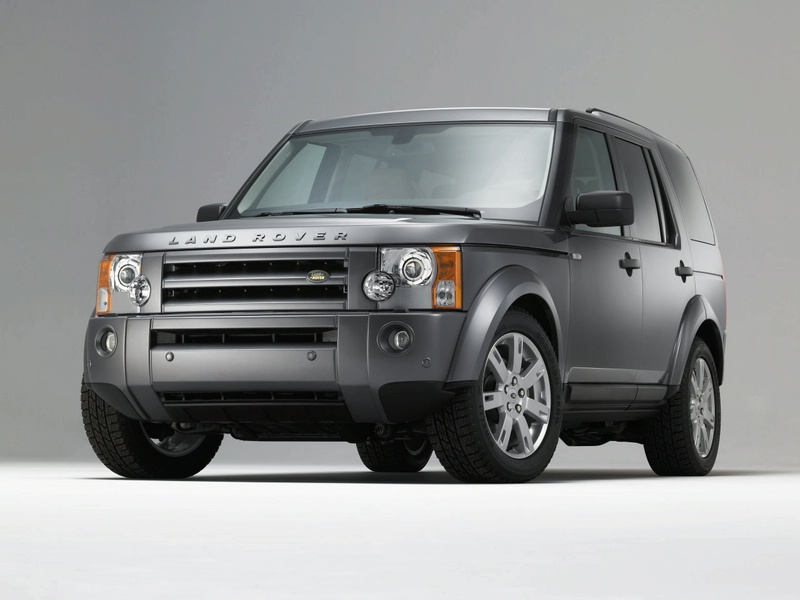
Land Rover Discovery 4, 2010


The new, fourth generation of Land Rover's supremely versatile seven-seat vehicle gains a new name - Land Rover Discovery 4 - to go with its powerful and highly efficient new TDV6 diesel engine, fresh exterior identity and more premium cabin. The class-leading breadth of capability is extended even further with dynamic improvements for both road and off-road driving, and Land Rover has added a battery of user-friendly new technologies and features.
The power and torque are both accessible across the entire rev range, to deliver immediate throttle response and effortless cruising ability. The results include a 0-60mph time of 9.0 seconds, (0-100 km/h in 9.6 seconds), a 24 percent improvement over the 2.7-litre.
Land Rover's engineers have also transformed the on-road ride and handling for the new generation Land Rover Discovery 4, and even improved on the near-legendary off-road capabilities of its predecessor. The comprehensive changes include new suspension components, revised steering, larger brakes, improved traction control, and enhancements to the award winning Terrain ResponseTM system, which helps optimise the vehicle for virtually all on-road or off-road driving situations.
e-Terrain technologies boost economy and lower CO2 emissions
The new Discovery is packed with features aimed at reducing fuel consumption and reducing CO2 emissions. The new LR-TDV6 3.0 Sequential Turbo Diesel engine was designed from the outset to deliver class-leading fuel economy and improved low-end torque.
The parallel sequential turbocharging system of the 3.0-litre diesel makes use of its larger, primary turbo most of the time. The smaller secondary turbo remains dormant when higher power is not required, reducing pumping losses and consequently, fuel consumption. A highly efficient, third generation common rail injection system with piezo injectors and fuel metering, also makes a substantial contribution to fuel economy.
The new engine has been also been optimised for low-end torque as well as economy, making it possible to activate the lock-up clutch of the ZF HP-28 automatic transmission at lower speed. This reduces 'slip' in the hydraulic torque converter improving both fuel consumption and CO2 emissions. The higher torque at lower rpm also enables longer gearing for more economical cruising.
The Discovery incorporates several other energy saving features too. At standstill, the idle speed of the V6 has been reduced from 750rpm to 710rpm, giving a fuel saving without compromising refinement. An Intelligent Power Management System includes Smart Regenerative Charging, so whenever possible the alternator charges the battery when it is most economical to do so, such as when the car is coasting rather than accelerating.
Aerodynamic changes to the front end, with the revised front lower chin spoiler and new front wheel deflectors, help to reduce drag by increasing underfloor airflow.
The new air conditioning pump is driven through a clutch which disengages when the air conditioning is not in use reducing parasitic losses and delivering improvements in fuel consumption and CO2 emissions.
At the heart of the improvements introduced with Land Rover Discovery 4 is an exceptional and highly efficient new diesel engine. The LR-TDV6 3.0 sequential turbodiesel is based on the existing LR-TDV6 2.7-litre engine, but radically redesigned to deliver substantially higher performance, lower emissions and better fuel economy.
The 2.7-litre has won many admirers as one of the most refined diesels ever made. The new, twin turbocharger LR-TDV6 3.0 boasts substantial increases in both power - up 29 percent to 245PS - and torque, up 36 percent to 600Nm. The ability to deliver maximum torque at just 2,000rpm, combined with unparalleled throttle response, substantially enhances the Discovery's already acclaimed ability both on and off-road.
The new 3.0-litre diesel can significantly out perform its rivals by delivering 500Nm in only 500 milliseconds from idle. From the driver's perspective this means instantaneous access to 83 percent of maximum torque.
But despite this extra performance, engine emissions are dramatically reduced. When fitted with DPF, the new LR-TDV6 3.0 meets EU5 emissions requirements (not due to come into force until 2011) and with a CO2 figure of 244g/km, it undercuts the existing 2.7-litre automatic by ten percent. Fuel economy is also improved by 9 percent, delivering 30.4mpg (9.3 l/100km) on the EU Combined cycle.
The new 3.0-litre engine has been developed by a joint Jaguar Land Rover team, with base characteristics designed from the outset with the requirements of both brands in mind. High levels of torque and fast response from low revs perfectly suits both Jaguar and Land Rover DNA. The Jaguar version, the AJ-V6D Gen III S, was recently launched in the new Jaguar XF.
The LR-TDV6 engine has a deeper sump than its Jaguar sibling, to ensure the efficiency of the lubrication system is not compromised when venturing off-road. The oil scavenge system of the turbochargers has been enhanced for a similar reason, ensuring no oil collects in the turbochargers at extreme angles in off-road conditions.
For the Land Rover version, belt drives are waterproofed, as are the alternator, air conditioning compressor, power steering pump and starter motor. The engine is also tuned specifically to allow for the greater demands made on the Land Rover Discovery 4, particularly for towing and all-terrain driving.
Twin-turbos - immensely efficient, highly responsive
A key feature of the new LR-TDV6 3.0 is the unique, parallel sequential turbocharger system, the first of its type to be fitted to a V-engine anywhere in the world. Delivering high torque throughout the entire engine-rev range, improved throttle response and low CO2 emissions, the twin-turbochargers work sequentially to provide unrivalled response and best-in-class torque at low engine speeds, while also packing a huge punch at higher speeds.
Driving a turbocharger requires pressure from the exhaust, creating pumping losses in the engine and increasing fuel consumption. Under the control of the engine management system, valves isolate the secondary turbocharger both from the exhaust stream and the engine inlet tract when it is not required. A balance pipe connecting the two manifolds allows the gas from both manifolds to feed through the primary turbocharger.
The new 3.0-litre diesel can significantly out perform its rivals by delivering 500Nm in only 500 milliseconds from idle, unlike many diesels which can suffer turbo-lag at very low revs. From the driver's perspective this means instantaneous access to 84 percent of maximum torque.
Third generation common rail
A new common rail fuel-injection system delivers up to five injections on each cycle at a pressure of 2000bar. Each injector tip is perforated by seven holes through which finely atomised fuel is sprayed into the cylinders. The high-pressure injection increases power, improves economy and reduces both CO2 and particulate emissions. New, high-speed piezo injectors are designed to keep injection noise to a minimum.
Piezo crystal 'packs' operate each injector by expanding when an electric current is passed through them. They react virtually instantaneously but make a distinctive click when fired, which can add to diesel engine noise at idle. The crystals in Land Rover's new injectors are fitted nearer the tip meaning they are mounted deeper inside the engine providing better sound insulation and quieter operation.
Rugged yet lightweight
The two cylinder heads, with four valves per cylinder, are made from aluminium and the cylinder block is made from compact graphite iron (CGI) as before. The higher tensile strength of CGI makes it possible to cast a smaller block some 80mm shorter than a conventional 'grey' cast iron equivalent.
EU 5 emissions regulations have been achieved using conventional diesel oxidation catalysts and diesel particulate filters (DPFs). NOX levels are reduced sufficiently at source through the combustion system design, the addition of the new common rail injection system and the new EGR system with by-pass. As a result, specialised NOX exhaust after-treatment is unnecessary, avoiding a potential cost and the need to use additional precious metals in the exhaust system.
Increased refinement
The CGI cylinder block and new piezo injector design reduce combustion noise in the new engine. Multiple, precise injections of fuel on the combustion stroke also reduce combustion noise and all engine covers including camshaft covers, front covers and the sump have been optimised to subdue radiated noise.
The new diesel underwent analysis using the latest computer aided engineering techniques, followed by exhaustive rig testing. All the engine enclosures have been ribbed to minimise radiated noise.
Internal friction, a major contributor to unnecessary fuel consumption, has been addressed by careful optimisation of the crankshaft, valves and pistons. All these features combine to make the new LR-TDV6 3.0 Sequential Turbo Diesel one of the quietest premium diesels on the market today with increased service intervals of 16,000 miles.
Levels of refinement on the new LR-TDV6 engine are such that Land Rover's patented device for the diesel fuel filler neck, to reduce the risk of inadvertent fuelling with petrol, is fitted to the new Land Rover Discovery 4.
Responsive new transmission
The LR-TDV6 3.0 is mated to the revised and super-smooth ZF HP28 6-speed automatic transmission. Its characteristics have been optimised by Land Rover engineers to provide class-leading response, with rapid and refined shifts. The dramatic enhancement of both power and torque low down the rev range on the new engine have made it possible to actuate the transmission's lock-up clutches much earlier in each gear, reducing slip through the hydraulic torque converter, so helping with the improvements in both fuel consumption and CO2 emissions.
Dynamics transformed
Major dynamic advances introduced for the Land Rover Discovery 4 include revised suspension architecture, improved steering, larger brakes and enhanced versions of Land Rover's award-winning Terrain ResponseTM and Hill Descent Control systems.
The list of changes starts with new suspension knuckles, designed to reduce the separation between the suspension roll centre and the vehicle's centre of gravity (reduction of 42mm at the front and 62mm at the rear). This dramatically reduces the vehicle's natural body movements when cornering. These roll rates are further controlled by a stiffer and larger anti-roll bar.
In addition, new bushes and new front and rear dampers enhance ride quality.
The variable ratio steering rack is revised, complementing the improved ride quality by reducing 'twitchiness' around the centre line at high speed cruising and slightly increasing sensitivity at higher lock angles. This enhances the sense of driver involvement in high-speed manoeuvres, and also increases precision for low speed control and off-roading.
Increased stopping power
A new, larger brake system has been introduced along with the new engines, to cater for the Land Rover Discovery 4's enhanced performance and to improve braking feel.
This new system is derived from the four-piston, opposed-calliper performance system used on the Land Rover Range Rover Sport. It employs a 360mm ventilated front disc with a new, cast iron twin-piston sliding calliper - which serves to reduce the size of the front brake package while preserving its stiffness, which in turn helps achieve excellent pedal feel.
At the rear, a single piston sliding calliper operates on a 350mm ventilated disc, now manufactured in aluminium to help reduce vehicle weight.
An additional advance to the braking system is the new emergency brake light function. When the vehicle undertakes severe or emergency braking, the brake lights flash, to reduce the risk of rear end collisions.
More control in the bends
A refinement to the understeer control system helps automatically slow the vehicle if taking a bend too fast, enhancing driver control.
The system operates according to steering inputs from the driver. In extreme cases, automatic braking intervenes to reduce the vehicle speed, with the braking pressure level applied according to the steering inputs. Automatic braking up to 'emergency stop' may be applied, if the inputs demand.
Updates for award-winning Terrain ResponseTM and Hill Descent Control
For Discovery 4, Land Rover's award-winning Terrain ResponseTM system gains new features and refinements, further extending the vehicle's all-terrain capability. Terrain ResponseTM optimises the vehicle set-up for virtually all on-road or off-road driving situations, with five different settings to suit different terrains:
* General driving
* Grass/gravel/snow
* Sand
* Mud and ruts
* Rock crawl
A new face on a distinctive design
The Land Rover Discovery has evolved a distinct design heritage over 20 years and four generations of iconic, instantly recognisable vehicles. Land Rover Discovery 4 inherits the clean lines of the previous generation, but now subtly updated and given a more premium, more contemporary look.
Smoother, simpler surfaces are employed at the front, giving the vehicle its new character, emphasised by sportier looking front lights, with new LED position lamps configured in a unique, signature stepped profile around the main light units. New lights are also introduced at the rear of the vehicle, incorporating LED stop, tail and indicator technology.
The new front bumper has a larger cooling aperture to accommodate the new engine's greater power outputs. Cleverly, the larger bumper actually improves vehicle aerodynamics by reducing drag, thanks to its innovative anti-drag 'lips' that help smooth the airflow from the front bumper around the front wheels.
A new, twin seven-spoke 19" wheel design is introduced on the Land Rover Discovery 4 to complement the existing 7-spoke 19" wheel and, for the first time, a new striking, 10-spoke 20" wheel is available as a factory-fit option.
The power and torque are both accessible across the entire rev range, to deliver immediate throttle response and effortless cruising ability. The results include a 0-60mph time of 9.0 seconds, (0-100 km/h in 9.6 seconds), a 24 percent improvement over the 2.7-litre.
Land Rover's engineers have also transformed the on-road ride and handling for the new generation Land Rover Discovery 4, and even improved on the near-legendary off-road capabilities of its predecessor. The comprehensive changes include new suspension components, revised steering, larger brakes, improved traction control, and enhancements to the award winning Terrain ResponseTM system, which helps optimise the vehicle for virtually all on-road or off-road driving situations.
e-Terrain technologies boost economy and lower CO2 emissions
The new Discovery is packed with features aimed at reducing fuel consumption and reducing CO2 emissions. The new LR-TDV6 3.0 Sequential Turbo Diesel engine was designed from the outset to deliver class-leading fuel economy and improved low-end torque.
The parallel sequential turbocharging system of the 3.0-litre diesel makes use of its larger, primary turbo most of the time. The smaller secondary turbo remains dormant when higher power is not required, reducing pumping losses and consequently, fuel consumption. A highly efficient, third generation common rail injection system with piezo injectors and fuel metering, also makes a substantial contribution to fuel economy.
The new engine has been also been optimised for low-end torque as well as economy, making it possible to activate the lock-up clutch of the ZF HP-28 automatic transmission at lower speed. This reduces 'slip' in the hydraulic torque converter improving both fuel consumption and CO2 emissions. The higher torque at lower rpm also enables longer gearing for more economical cruising.
The Discovery incorporates several other energy saving features too. At standstill, the idle speed of the V6 has been reduced from 750rpm to 710rpm, giving a fuel saving without compromising refinement. An Intelligent Power Management System includes Smart Regenerative Charging, so whenever possible the alternator charges the battery when it is most economical to do so, such as when the car is coasting rather than accelerating.
Aerodynamic changes to the front end, with the revised front lower chin spoiler and new front wheel deflectors, help to reduce drag by increasing underfloor airflow.
The new air conditioning pump is driven through a clutch which disengages when the air conditioning is not in use reducing parasitic losses and delivering improvements in fuel consumption and CO2 emissions.
At the heart of the improvements introduced with Land Rover Discovery 4 is an exceptional and highly efficient new diesel engine. The LR-TDV6 3.0 sequential turbodiesel is based on the existing LR-TDV6 2.7-litre engine, but radically redesigned to deliver substantially higher performance, lower emissions and better fuel economy.
The 2.7-litre has won many admirers as one of the most refined diesels ever made. The new, twin turbocharger LR-TDV6 3.0 boasts substantial increases in both power - up 29 percent to 245PS - and torque, up 36 percent to 600Nm. The ability to deliver maximum torque at just 2,000rpm, combined with unparalleled throttle response, substantially enhances the Discovery's already acclaimed ability both on and off-road.
The new 3.0-litre diesel can significantly out perform its rivals by delivering 500Nm in only 500 milliseconds from idle. From the driver's perspective this means instantaneous access to 83 percent of maximum torque.
But despite this extra performance, engine emissions are dramatically reduced. When fitted with DPF, the new LR-TDV6 3.0 meets EU5 emissions requirements (not due to come into force until 2011) and with a CO2 figure of 244g/km, it undercuts the existing 2.7-litre automatic by ten percent. Fuel economy is also improved by 9 percent, delivering 30.4mpg (9.3 l/100km) on the EU Combined cycle.
The new 3.0-litre engine has been developed by a joint Jaguar Land Rover team, with base characteristics designed from the outset with the requirements of both brands in mind. High levels of torque and fast response from low revs perfectly suits both Jaguar and Land Rover DNA. The Jaguar version, the AJ-V6D Gen III S, was recently launched in the new Jaguar XF.
The LR-TDV6 engine has a deeper sump than its Jaguar sibling, to ensure the efficiency of the lubrication system is not compromised when venturing off-road. The oil scavenge system of the turbochargers has been enhanced for a similar reason, ensuring no oil collects in the turbochargers at extreme angles in off-road conditions.
For the Land Rover version, belt drives are waterproofed, as are the alternator, air conditioning compressor, power steering pump and starter motor. The engine is also tuned specifically to allow for the greater demands made on the Land Rover Discovery 4, particularly for towing and all-terrain driving.
Twin-turbos - immensely efficient, highly responsive
A key feature of the new LR-TDV6 3.0 is the unique, parallel sequential turbocharger system, the first of its type to be fitted to a V-engine anywhere in the world. Delivering high torque throughout the entire engine-rev range, improved throttle response and low CO2 emissions, the twin-turbochargers work sequentially to provide unrivalled response and best-in-class torque at low engine speeds, while also packing a huge punch at higher speeds.
Driving a turbocharger requires pressure from the exhaust, creating pumping losses in the engine and increasing fuel consumption. Under the control of the engine management system, valves isolate the secondary turbocharger both from the exhaust stream and the engine inlet tract when it is not required. A balance pipe connecting the two manifolds allows the gas from both manifolds to feed through the primary turbocharger.
The new 3.0-litre diesel can significantly out perform its rivals by delivering 500Nm in only 500 milliseconds from idle, unlike many diesels which can suffer turbo-lag at very low revs. From the driver's perspective this means instantaneous access to 84 percent of maximum torque.
Third generation common rail
A new common rail fuel-injection system delivers up to five injections on each cycle at a pressure of 2000bar. Each injector tip is perforated by seven holes through which finely atomised fuel is sprayed into the cylinders. The high-pressure injection increases power, improves economy and reduces both CO2 and particulate emissions. New, high-speed piezo injectors are designed to keep injection noise to a minimum.
Piezo crystal 'packs' operate each injector by expanding when an electric current is passed through them. They react virtually instantaneously but make a distinctive click when fired, which can add to diesel engine noise at idle. The crystals in Land Rover's new injectors are fitted nearer the tip meaning they are mounted deeper inside the engine providing better sound insulation and quieter operation.
Rugged yet lightweight
The two cylinder heads, with four valves per cylinder, are made from aluminium and the cylinder block is made from compact graphite iron (CGI) as before. The higher tensile strength of CGI makes it possible to cast a smaller block some 80mm shorter than a conventional 'grey' cast iron equivalent.
EU 5 emissions regulations have been achieved using conventional diesel oxidation catalysts and diesel particulate filters (DPFs). NOX levels are reduced sufficiently at source through the combustion system design, the addition of the new common rail injection system and the new EGR system with by-pass. As a result, specialised NOX exhaust after-treatment is unnecessary, avoiding a potential cost and the need to use additional precious metals in the exhaust system.
Increased refinement
The CGI cylinder block and new piezo injector design reduce combustion noise in the new engine. Multiple, precise injections of fuel on the combustion stroke also reduce combustion noise and all engine covers including camshaft covers, front covers and the sump have been optimised to subdue radiated noise.
The new diesel underwent analysis using the latest computer aided engineering techniques, followed by exhaustive rig testing. All the engine enclosures have been ribbed to minimise radiated noise.
Internal friction, a major contributor to unnecessary fuel consumption, has been addressed by careful optimisation of the crankshaft, valves and pistons. All these features combine to make the new LR-TDV6 3.0 Sequential Turbo Diesel one of the quietest premium diesels on the market today with increased service intervals of 16,000 miles.
Levels of refinement on the new LR-TDV6 engine are such that Land Rover's patented device for the diesel fuel filler neck, to reduce the risk of inadvertent fuelling with petrol, is fitted to the new Land Rover Discovery 4.
Responsive new transmission
The LR-TDV6 3.0 is mated to the revised and super-smooth ZF HP28 6-speed automatic transmission. Its characteristics have been optimised by Land Rover engineers to provide class-leading response, with rapid and refined shifts. The dramatic enhancement of both power and torque low down the rev range on the new engine have made it possible to actuate the transmission's lock-up clutches much earlier in each gear, reducing slip through the hydraulic torque converter, so helping with the improvements in both fuel consumption and CO2 emissions.
Dynamics transformed
Major dynamic advances introduced for the Land Rover Discovery 4 include revised suspension architecture, improved steering, larger brakes and enhanced versions of Land Rover's award-winning Terrain ResponseTM and Hill Descent Control systems.
The list of changes starts with new suspension knuckles, designed to reduce the separation between the suspension roll centre and the vehicle's centre of gravity (reduction of 42mm at the front and 62mm at the rear). This dramatically reduces the vehicle's natural body movements when cornering. These roll rates are further controlled by a stiffer and larger anti-roll bar.
In addition, new bushes and new front and rear dampers enhance ride quality.
The variable ratio steering rack is revised, complementing the improved ride quality by reducing 'twitchiness' around the centre line at high speed cruising and slightly increasing sensitivity at higher lock angles. This enhances the sense of driver involvement in high-speed manoeuvres, and also increases precision for low speed control and off-roading.
Increased stopping power
A new, larger brake system has been introduced along with the new engines, to cater for the Land Rover Discovery 4's enhanced performance and to improve braking feel.
This new system is derived from the four-piston, opposed-calliper performance system used on the Land Rover Range Rover Sport. It employs a 360mm ventilated front disc with a new, cast iron twin-piston sliding calliper - which serves to reduce the size of the front brake package while preserving its stiffness, which in turn helps achieve excellent pedal feel.
At the rear, a single piston sliding calliper operates on a 350mm ventilated disc, now manufactured in aluminium to help reduce vehicle weight.
An additional advance to the braking system is the new emergency brake light function. When the vehicle undertakes severe or emergency braking, the brake lights flash, to reduce the risk of rear end collisions.
More control in the bends
A refinement to the understeer control system helps automatically slow the vehicle if taking a bend too fast, enhancing driver control.
The system operates according to steering inputs from the driver. In extreme cases, automatic braking intervenes to reduce the vehicle speed, with the braking pressure level applied according to the steering inputs. Automatic braking up to 'emergency stop' may be applied, if the inputs demand.
Updates for award-winning Terrain ResponseTM and Hill Descent Control
For Discovery 4, Land Rover's award-winning Terrain ResponseTM system gains new features and refinements, further extending the vehicle's all-terrain capability. Terrain ResponseTM optimises the vehicle set-up for virtually all on-road or off-road driving situations, with five different settings to suit different terrains:
* General driving
* Grass/gravel/snow
* Sand
* Mud and ruts
* Rock crawl
A new face on a distinctive design
The Land Rover Discovery has evolved a distinct design heritage over 20 years and four generations of iconic, instantly recognisable vehicles. Land Rover Discovery 4 inherits the clean lines of the previous generation, but now subtly updated and given a more premium, more contemporary look.
Smoother, simpler surfaces are employed at the front, giving the vehicle its new character, emphasised by sportier looking front lights, with new LED position lamps configured in a unique, signature stepped profile around the main light units. New lights are also introduced at the rear of the vehicle, incorporating LED stop, tail and indicator technology.
The new front bumper has a larger cooling aperture to accommodate the new engine's greater power outputs. Cleverly, the larger bumper actually improves vehicle aerodynamics by reducing drag, thanks to its innovative anti-drag 'lips' that help smooth the airflow from the front bumper around the front wheels.
A new, twin seven-spoke 19" wheel design is introduced on the Land Rover Discovery 4 to complement the existing 7-spoke 19" wheel and, for the first time, a new striking, 10-spoke 20" wheel is available as a factory-fit option.